About half a year late, but with nothing much else to do, I reminisce my quick visit at MOCA Taipei.

Also known as the Museum of Contemporary Art Taipei, the MOCA at the Datong District of Taipei is the first museum exclusively dedicated to contemporary art. The building lies connected with the Taipei City Municipal Jiancheng Junior High School (a later expansion from the original Japanese school-turned-office-turned-museum building).
One can easily access the museum on a leisurely stroll from Zhongshan Station. There was a slight overcast that late in September when I did, so maybe bring an umbrella just in case.

It must have been some great fortune that I was right on time to see their current exhibition, Once Upon A Time. Unfinished Progressive Past.
Here is an excerpt from the curator, Chien-Hui Kao, delving into the exhibition’s meaning:
“Once Upon A Time encompasses the life and cultural memories of three post-war generations as well as the repressed and upheaval past they have shared, employing visual art to represent taming, confusion, imitation, resistance, self-adjustment that speak individual and collective search for an outlet.”
(read more at the MOCA Taipei website’s exhibit page)


Bridging the remaining language and contextual barriers, all exhibits were partnered with audio guides which I found as a welcome surprise and helped me better appreciate the artists’ minutiae.
inside the first floor
Upon entering, I was greeted by the usher and then directed to the admission counter before proceeding inside. They were very helpful in explaining the area and even gave me a map of the exhibit floor plans and locations.

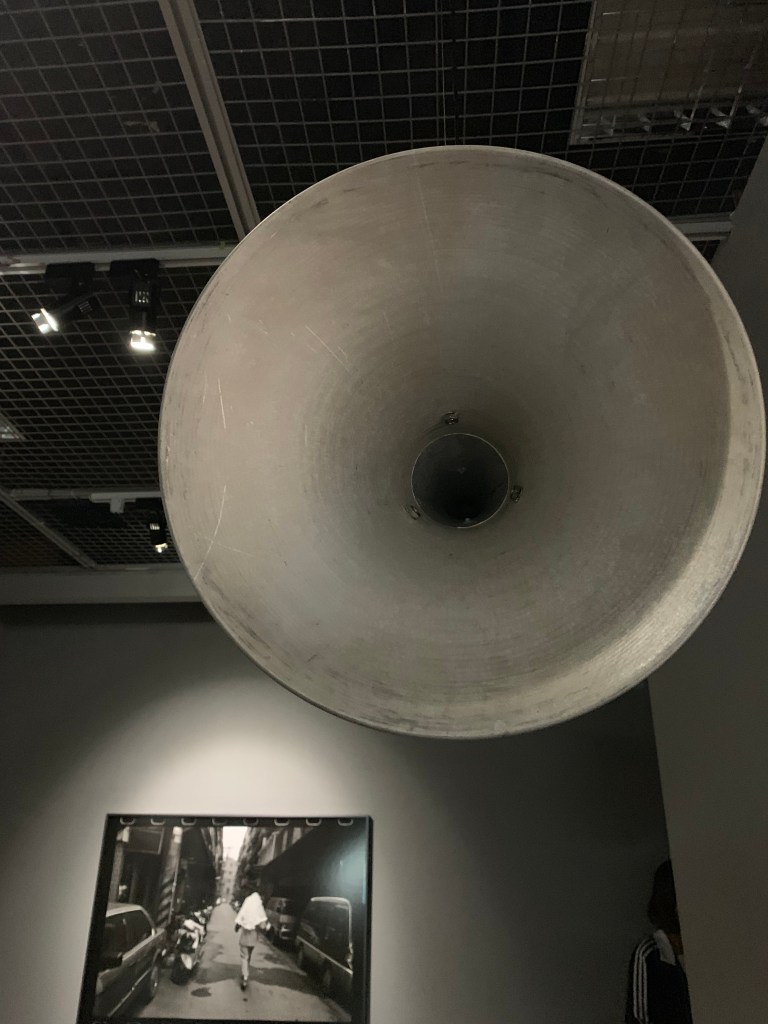
Greeting me was the grey room that housed The War That Never Was. Black and white photographs and a wall of printed text on paper welcomed me further towards voices emanating from a suspended phonograph and the small theater within.
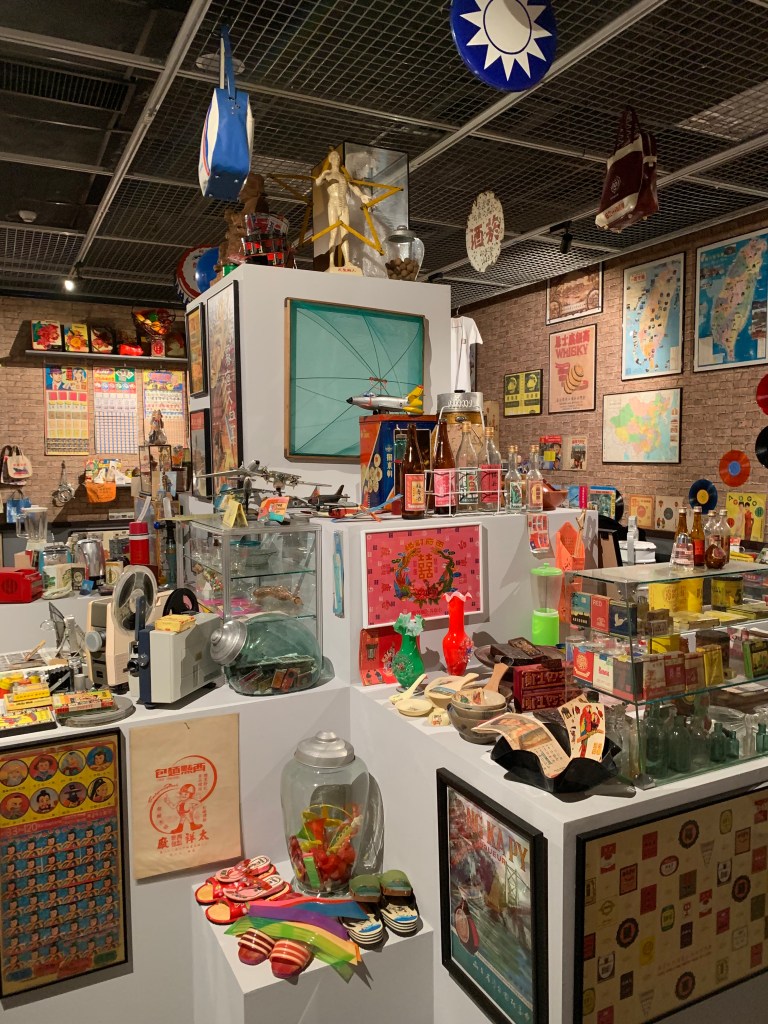

I liked the next room a lot, Youthful Taiwan was a vibrant array showcasing paraphernalia from Taiwan’s past images as seen in their domestic and popular culture. Juxtapositions of young and adult media, of idols and past times, the colorful collection leaves much to be seen and appreciated to keep you for the whole day. I barely escaped to see more of the museum before closing time.


Entering the space and seeing The House She Wants to Build was a very shameful, in that it feels so raw and personal that it made me feel like I am overstepping and breaching someone else’s privacy. The exposition of a self depicted in the paintings and the central brick wall montage is shockingly visceral and calls for sympathy while unassumingly sits quietly in soft the hues of a flowery pallete.

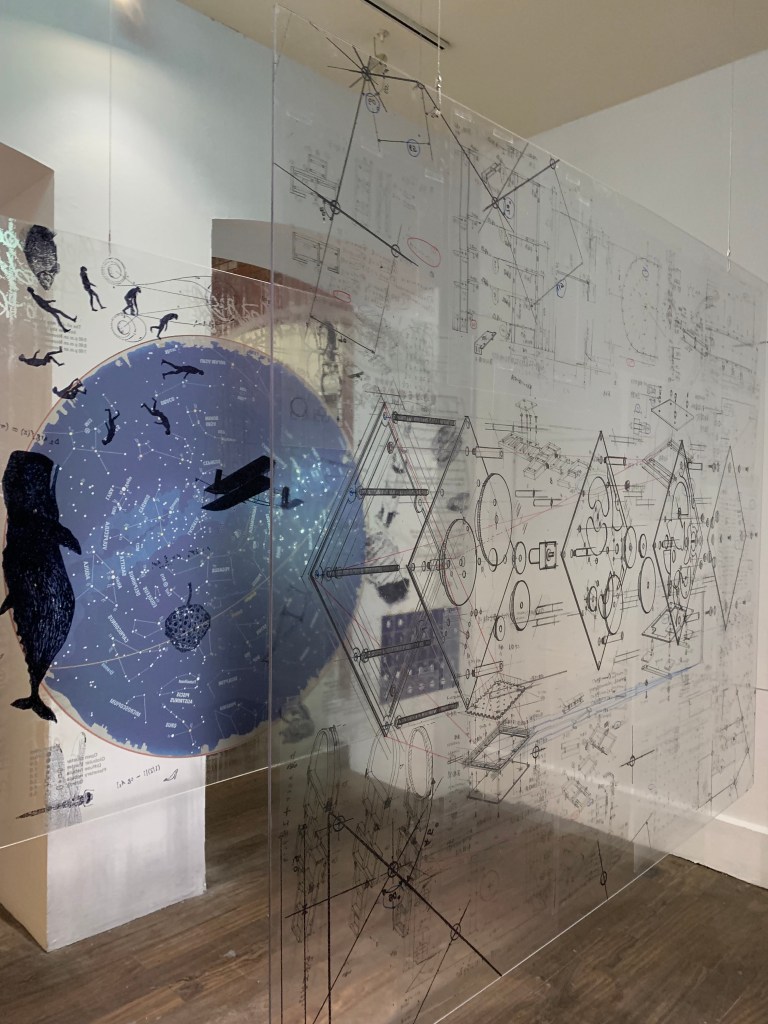
Still somewhat a mystery to me, Nine Dreams – Hopscotch at face value looks like engineering blueprints and a confusing sequence of mechanical designs. But it all compounds to a summation at the end of the display at the west end of the building, unveiling a dreamscape of symbols and drawings that try to define the interconnectedness of all the things in the world.
up the stairwell
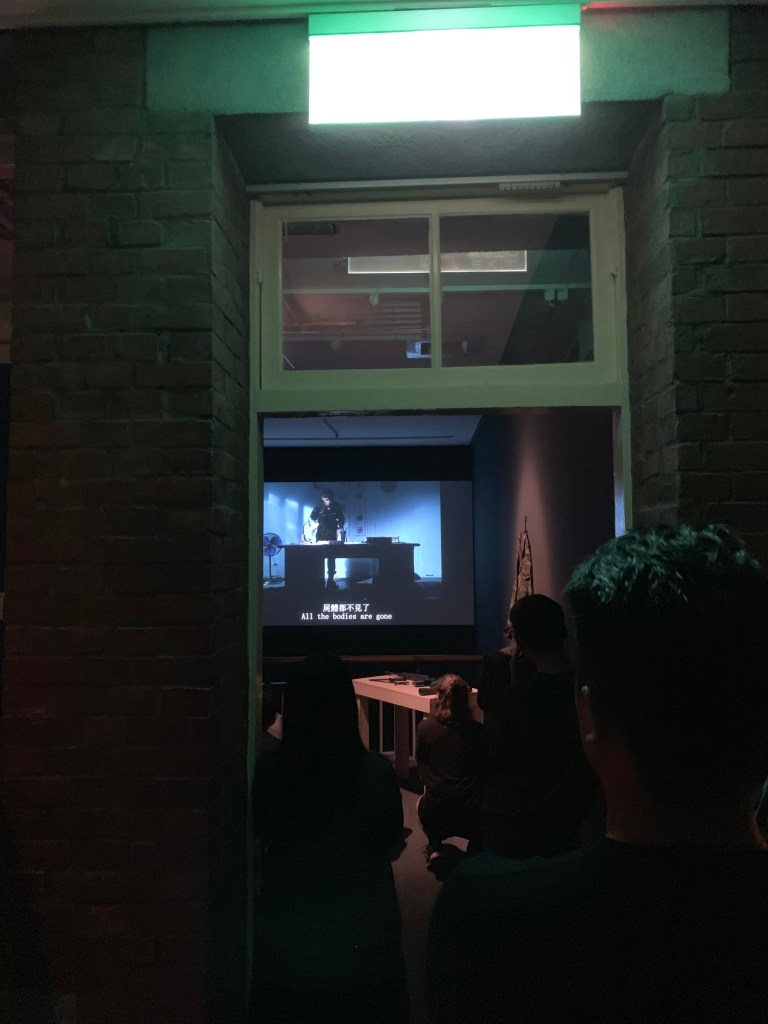

The museum’s many stairwells also provide impromptu exhibits. Here 02-06 is playing just above the heads of people climbing the steps. The film tells a cyclical story of doomed innocence and traumas inflicted to young men by war (here specifically noting the Cold War) and the emotions that are left to linger and fester.
A cute setup of projected photos was located in the central stairwell, it was part of the evolving word and language art in Rewriting Les règles de l’art that adorned the walls of the first floor corridors.
on the upper floor

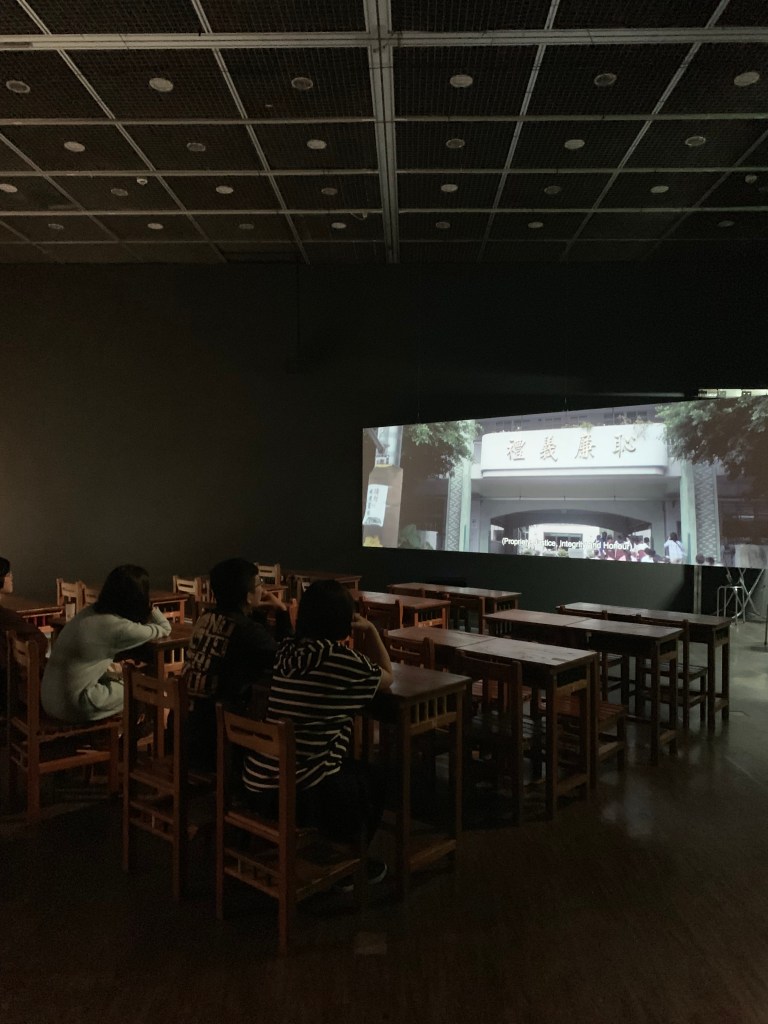
The second floor emptied to a great space, a hall that housed the bigger art pieces and exhibits. More of the film installations and interactive arrangements were given a wider, unconstrained display in this section. I even got to sit on a school desk!

The size of the expositions lent to a magnified impact of the moving picture media, leading the viewer to feel small compared to the huge looming faces ahead.


Quite possibly one of my favorites, were the caricatural reports or “satellite news gathering (SNG)” broadcasts quite endearingly recreated (read as “blown out of proportion”) to play in an analog TV box in a hole-in-the-wall joint setup.
Hauntingly sardonic and some so fantastically absurd, but scary with plausibility in today’s happenings.

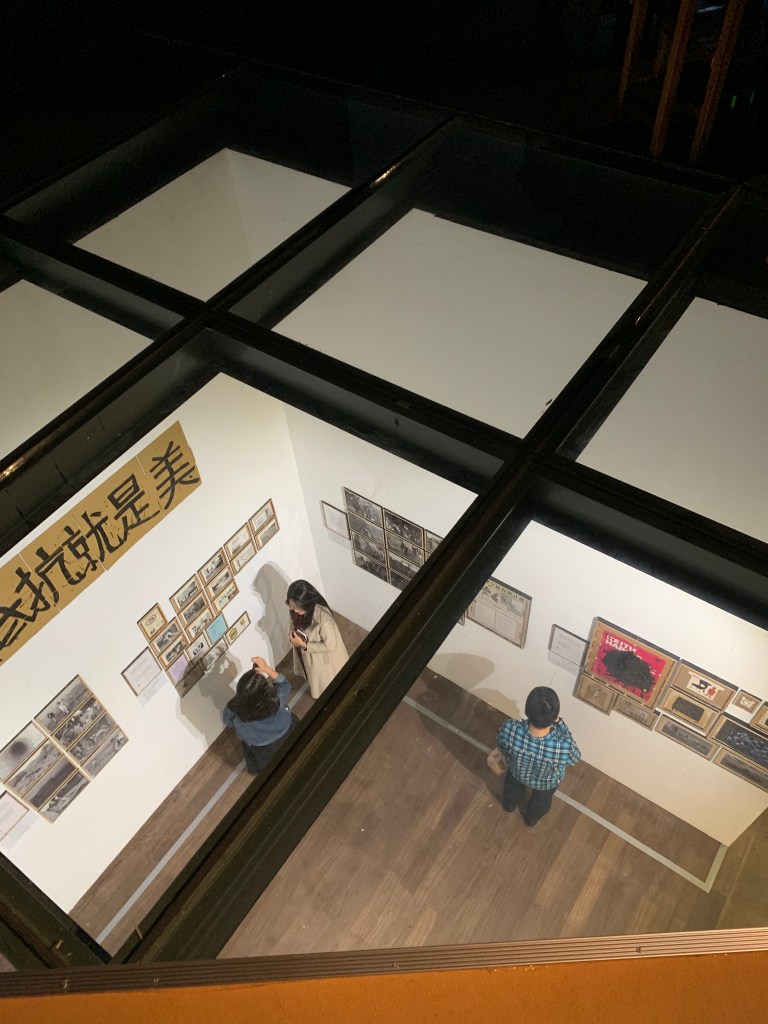
The size of the hall also gave freedom for collaborative exhibits as that of Ideal House that was put together by a group of artists, experts, and professionals. Their display comprised of an actual constructed small building (not shown on photos) accompanied by large set pieces depicting directional signs and even actual billboards.

Undeniably the best part, Absolute Loneliness is by far the most bizzare and entertaining thing I’ve seen there. Having displays of modded bicycles and a…erm…hexacycle (I’m sure they all had better, proper names) all the while complemented by the comedic take on a Western influenced culture, growing up, and life’s purpose as seen on the accompanying film and its funky sound score.


I just absolutely adore this!
outside again
Another exhibit greeted me on my way out, however it was unfortunate that I hadn’t any more time to appreciate the installation as it was already getting dark, so I went my way to meet my friends for dinner – eyes and spirits already satisfied.


The combined exhibition that tried to define the origins of the local contemporary art scene of Taiwan was not only warm, but unashamed in making itself known no only to those within, but also to the uninitiated.
As all can be expected (or unexpected) of contemporary art, in full unapologetic mediums of light, color, sound, shape, texture, emotion, and recollections, MOCA Taipei definitely filled my inner cup that afternoon.
(more information about the various exhibits here are easily available at the MOCA Taipei website)

 lyuzon